Insights · AI and work
Systems thinking in the age of AI
AI lets one person work across more disciplines than ever. The advantage goes to people who can see how the pieces connect.
· 2 min read
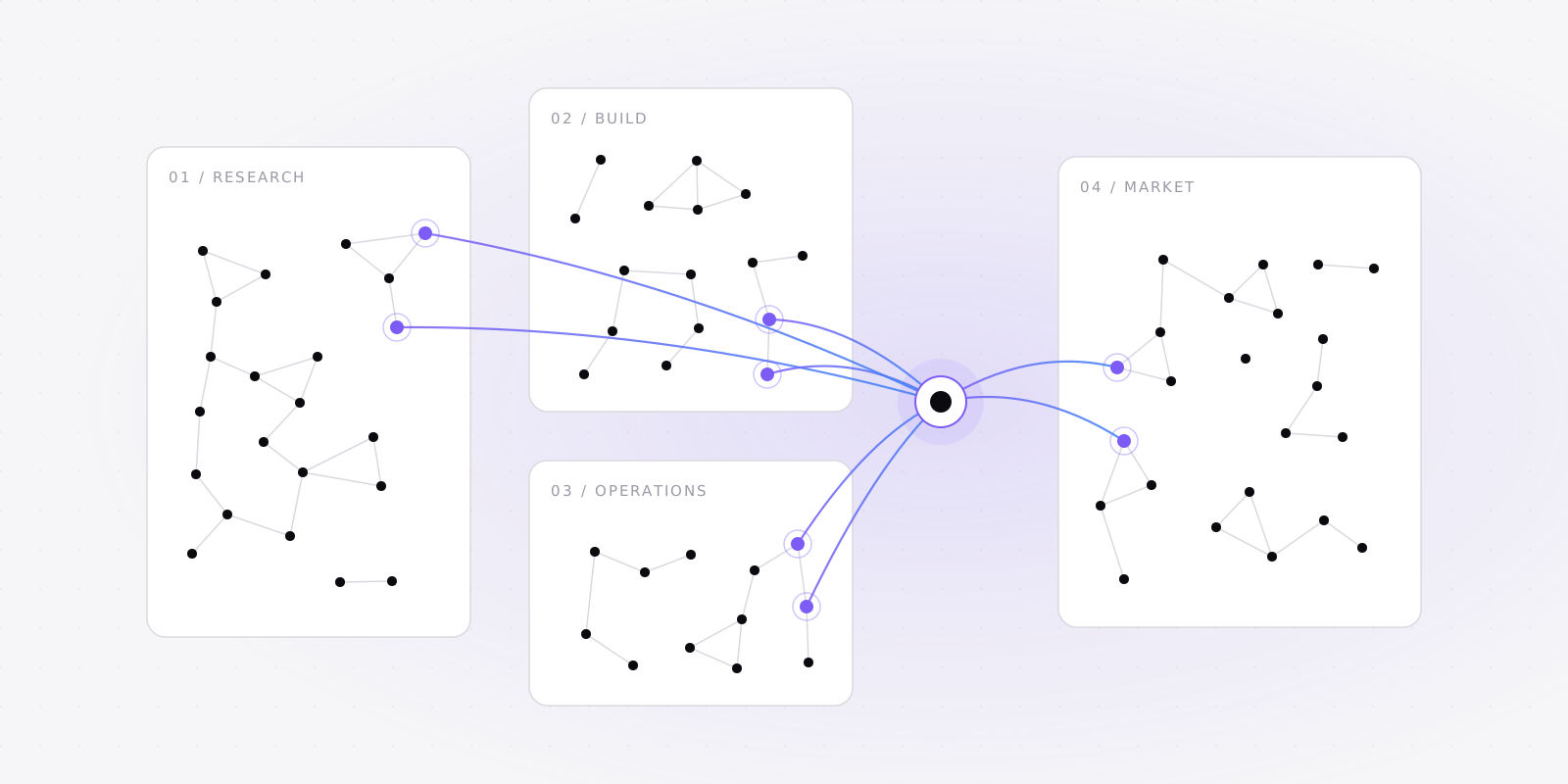
For most of the last century, work has been organised by specialism. Schools teach subjects in separate rooms and careers reward going deep in a single field. That depth still matters. But as futurist Sinéad Bovell argues in The Rise of Systems Thinking, the edges of a job rarely match the reach of its effects.
“The boundaries of our professions have always been narrower than the consequences of our work.”
AI is now widening what one person can do. A marketer can build working software. A chemist can test ideas in biology. An electrician can run their own marketing and admin. In Bovell’s conversation with Yossi Matias, Head of Google Research, he describes researchers who each have an AI “virtual lab” that reads across disciplines, so their role shifts towards asking the right questions and steering the work.
Bovell calls the person who thrives here a systems thinker: an “organisation of one” who builds, weighs the ethics, asks good questions and keeps adapting. Matias names the skills that matter most as framing the right question, spotting the opportunity, communicating, listening and applying judgment. “Sometimes we call them soft skills, but they’re skills.”
For leaders, this changes how projects and teams are set up. Before approving an AI initiative, ask how it serves the whole business, what it changes elsewhere, and what it makes possible over time. Expertise does not disappear. Its value now depends on how well it connects to everything around it.
That is the lens we bring to every engagement at Novadigm.